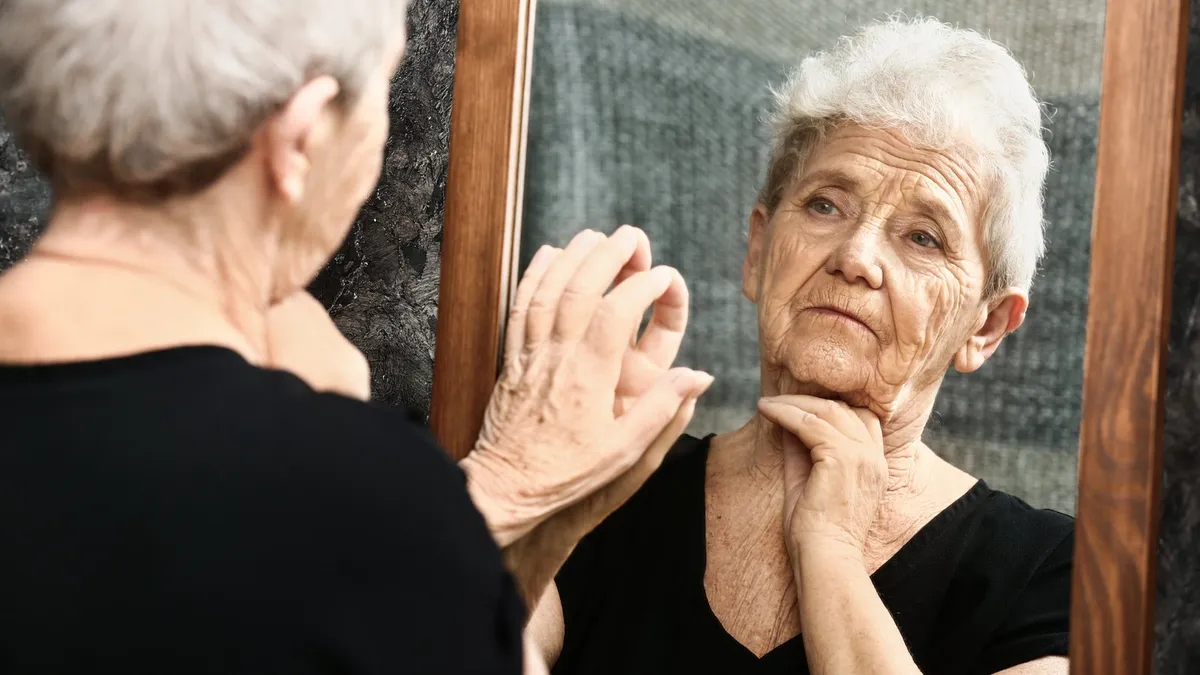
Feel Older Than Your Age? When Everything Seems to Change at Once
It's not one thing. You're tired, your sleep is poor, you feel anxious or up and down, your waist is growing, your joints ache, your head is foggy and you can't do as much as you used to. Put together, you feel much older than your age.
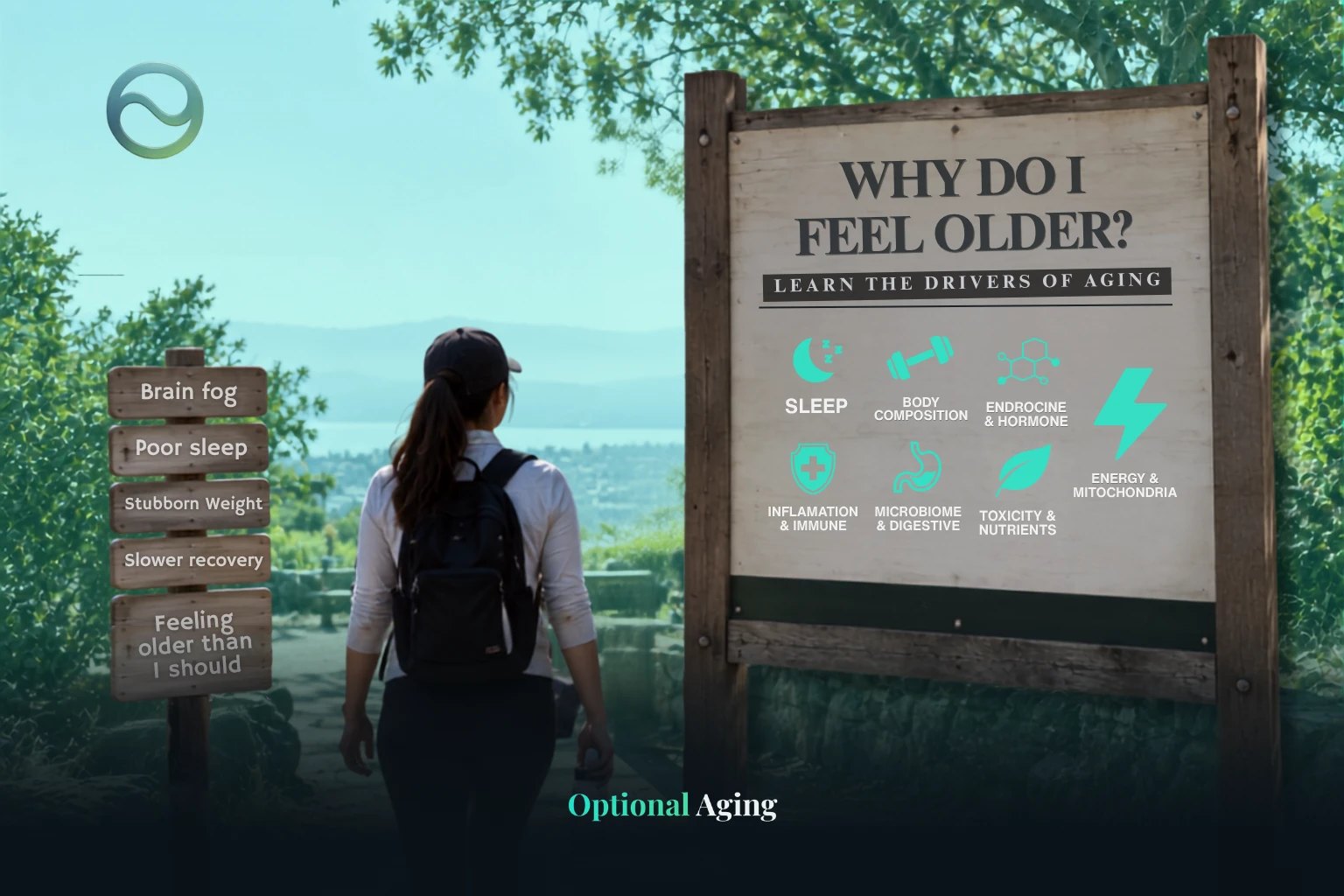
In Optional Aging's teaching, this is the pattern where several systems are strained at the same time. It can feel overwhelming, but Dr. Sajad Zalzala also sees it as the pattern with the most room to improve when things are tackled in the right order.
What this pattern often feels like
- Fatigue and poor sleep
- Anxiety or mood swings
- Weight gain around the middle
- Brain fog and joint aches
- Less stamina for exercise
- Lower interest in sex, and hot flashes that may linger
Why it happens
After menopause, several hormones can fall at once, including estrogen, progesterone, testosterone and DHEA. The stress-hormone rhythm and thyroid can drift too, and blood sugar control often gets harder. Each change affects the others.
That's why focusing on just one piece, like only estrogen or only diet, often doesn't move the needle. It's a whole-picture problem.
What it isn't
- It isn't simply "getting old."
- It isn't a personal failure.
- It isn't solved by doing everything at once. That usually leads to burnout.
Where to start
- List your top three symptoms in order of how much they affect your life.
- Look at sleep first. It affects almost everything else. Hot Flashes, Night Sweats and Brain Fog explains how hormones and sleep connect.
- Make one change at a time and give it two to four weeks.
- Bring your list to a doctor who will look at the whole picture, not one symptom at a time.
If weight is a big part of it, read Can't Lose Weight No Matter What You Do?. If you're always cold and tired, see Always Cold, Tired and Gaining Weight?.
Your takeaway and next step
Your takeaway: When many things change at once, it's often several connected systems under strain. The order you work on them matters more than how hard you push.
Your next step: Write down your top three symptoms today. That simple list is the best starting point for a useful conversation with your doctor.
When to talk to a doctor
See a healthcare professional to look at the whole picture, especially if symptoms are new or getting worse. Any bleeding after menopause should be checked promptly. MedlinePlus has a good overview of healthy aging.
Want to keep learning?
For more education and discussion about hormones, energy, and healthy aging, you're welcome in the free Optional Aging community on Skool. Join the free community
Not sure where to start? Take the free DriversPulse assessment to see which areas may be affecting how you feel. It's free, with no cost to you. Take the free DriversPulse assessment
Want a doctor to look at the whole picture? With Healthspan Radar, Dr. Sajad Zalzala personally reviews your health story and any labs you choose to share. See how Healthspan Radar works
Educational information only. This article does not diagnose any condition or replace care from your own doctor.
Written by Dr. Sajad Zalzala, physician and founder of Optional Aging.