Getting Sick More Often and Slow to Get Better? What It Can Mean
It used to be one cold a year, gone in a few days. Now you seem to catch everything, and each time it takes weeks before you feel like yourself again.
In Optional Aging's teaching, this is called the Immune Under-Responder pattern. It means your body's defenses and reserve may be running low, so it struggles when a real challenge shows up.
What reserve means
Think of reserve as the extra capacity your body keeps for busy times. On an ordinary day, someone with good reserve and someone with low reserve can feel the same. The difference shows up during an infection, travel, a stretch of poor sleep or a stressful month.
Dr. Sajad Zalzala points out a surprising thing about aging: the immune system can become noisier and less effective at the same time. That's one reason "boosting" your immune system isn't the right goal.
What can drain your defenses
- Short or poor sleep
- Long-term stress
- Not eating enough, or not enough protein
- Some medicines
- Ongoing health conditions
Age changes the odds, but it isn't the whole story. A younger person who sleeps badly can have low reserve, and an older person can be very resilient.
What it isn't
- It isn't fixed by a single immune-boosting product.
- It isn't just bad luck if it keeps happening.
- It isn't something to ignore if infections are frequent or severe.
What to notice first
- How many infections you've had in the past year, and how long each one lasted.
- How you were sleeping before you got sick.
- Your stress level in the weeks before.
- Whether you're up to date on recommended vaccines.
Sleep is one of the biggest levers here. If yours is rough, start with 4 Types of Sleep Problems.
Your takeaway and next step
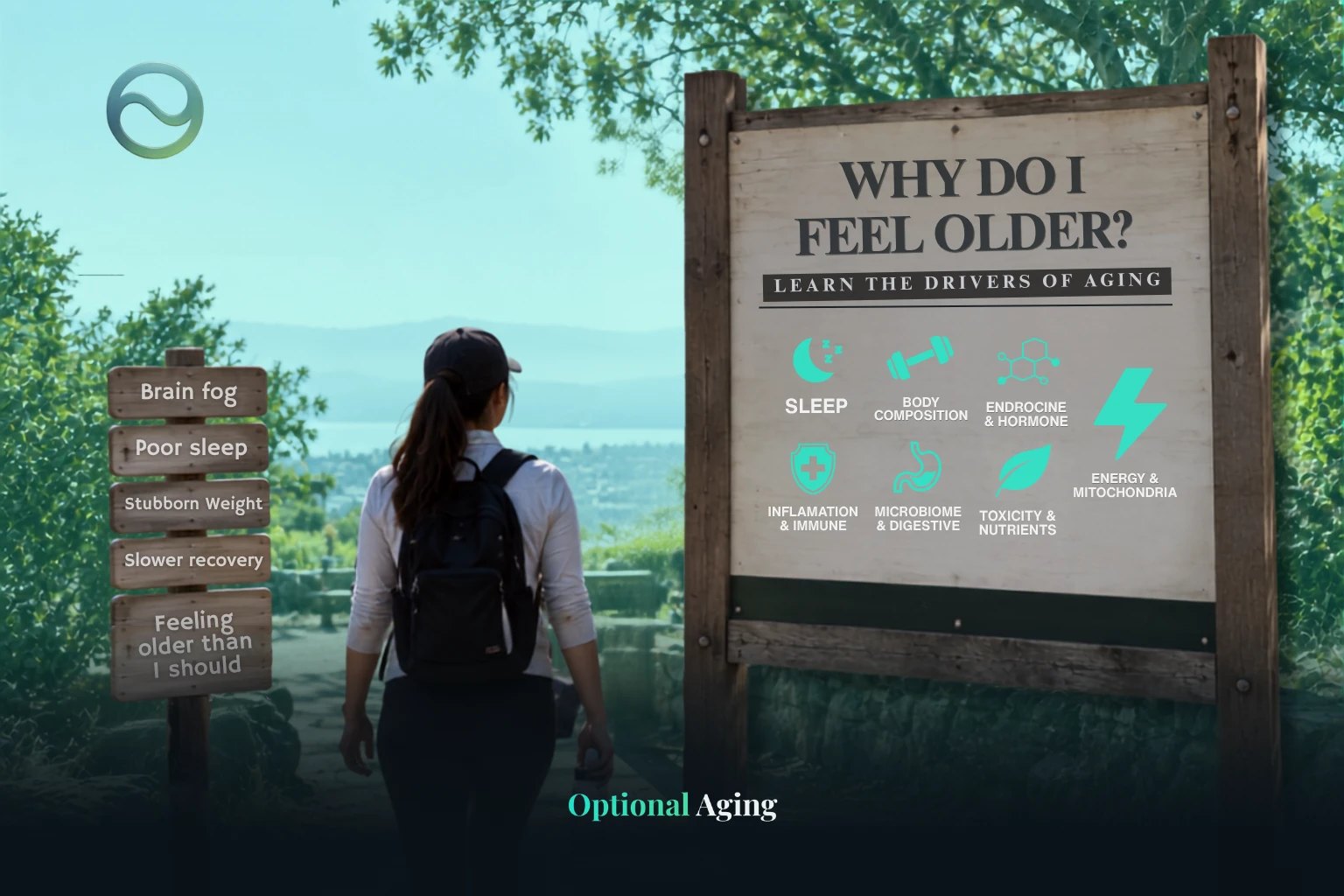
Your takeaway: Getting sick more often and recovering slowly can mean your reserve is low. Rebuilding it usually starts with sleep, stress and nutrition.
Your next step: Write down the infections you've had this year and roughly how long each lasted. It's useful information for you and your doctor.
When to talk to a doctor
See a healthcare professional if you have frequent, severe or unusual infections, infections that don't respond to treatment, or wounds that heal very slowly. MedlinePlus has an overview of the immune system and its disorders.
Want to keep learning?
For more education and discussion about recovery, immune health, and healthy aging, you're welcome in the free Optional Aging community on Skool. Join the free community
Not sure where to start? Take the free DriversPulse assessment to see which areas may be affecting how you feel. It's free, with no cost to you. Take the free DriversPulse assessment
Want a doctor to look at the whole picture? With Healthspan Radar, Dr. Sajad Zalzala personally reviews your health story and any labs you choose to share. See how Healthspan Radar works
Educational information only. This article does not diagnose any condition or replace care from your own doctor.
Written by Dr. Sajad Zalzala, physician and founder of Optional Aging.