Why Am I Gaining Belly Fat After 40 When My Weight Hasn't Changed?
A lot of people notice it the same way. The scale says about the same thing it did a few years ago, but pants feel tighter around the middle. It's easy to shrug off as "just getting older."
Dr. Sajad Zalzala teaches that it's worth a closer look, because where your body stores fat can tell you more than your weight does.
Your weight is a total, not the whole story
The scale adds everything together: muscle, fat, water and bone. It can't tell you whether you've lost some muscle and gained some fat, or where that fat sits. Two people can weigh exactly the same and have very different health pictures.
Fat stored deep in the belly, around the organs, tends to act differently from fat under the skin on the hips or thighs. A larger waist is linked with higher chances of changes in blood sugar, blood pressure and cholesterol. Doctors group several of these together as metabolic syndrome. That's why a growing waist can be a useful early signal, even when your weight is steady.
What this pattern often feels like
In Optional Aging's teaching, people with this pattern often describe:
- A waist that keeps growing while the scale barely moves
- Feeling stuck, even though they're putting in real effort
- A heavy or puffy feeling, especially around the middle
- Energy that's okay day to day, but progress that feels slower every year
It usually isn't dramatic. Dr. Sajad Zalzala describes it as a slow tightening, not a sudden crash.
What it isn't
- It isn't just "being overweight." It can happen at a normal weight.
- It isn't only about calories.
- It isn't a sign that you lack willpower.
What to notice first
You don't need special tests to start. A few simple things give you a clearer picture:
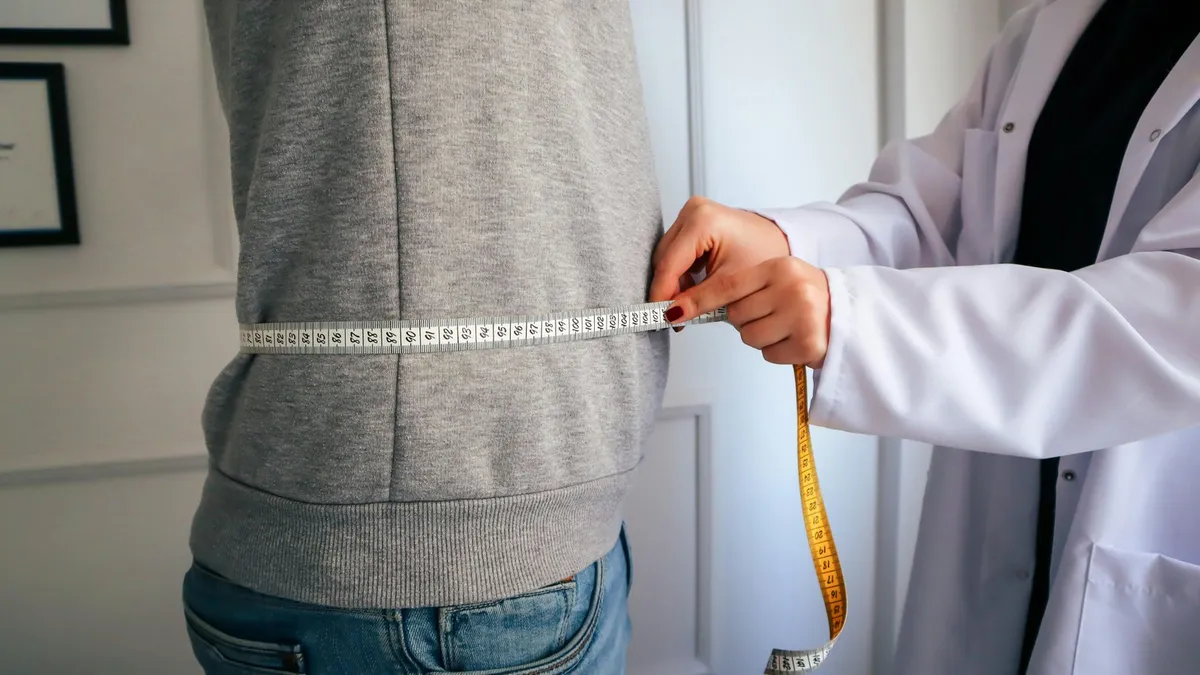
- Your waist, measured the same way each time. Measure around your belly at the level of your belly button, in the morning, every week or two. The trend matters more than any single number.
- How your clothes fit. Belts and waistbands often notice change before the scale does.
- Your recent labs, if you have them. Look for fasting glucose, A1c, triglycerides and HDL cholesterol. Results inside the normal range can still drift over the years, sometimes toward prediabetes. Ask your doctor how yours have changed over time, not just whether they're "normal."
If you'd like more detail, a body scan such as a DEXA scan can show how much of your weight is muscle and how much is fat, and where it sits. It's optional. Plenty of people start with a tape measure and a notebook.
A growing waist sometimes goes along with losing muscle. If you've also been feeling weaker, read Losing Muscle After 40: 5 Signs Your Strength Is Slipping.
Your takeaway and next step
Your takeaway: A growing waist with a steady weight is worth noticing. It's a signal to understand, not a reason to blame yourself.
Your next step: Measure your waist this week and write the number down with the date. Do it again in two weeks. You'll have a real trend to share instead of a guess.
When to talk to a doctor
See a healthcare professional if your weight or waist changes quickly without a clear reason. If you take diabetes medicine, talk to your doctor before making big changes to how you eat. If you've struggled with eating disorders, it's best to make any changes with support.
Want to keep learning?
For more education and discussion about weight, energy, and healthy aging, you're welcome in the free Optional Aging community on Skool. Join the free community
Not sure where to start? Take the free DriversPulse assessment to see which areas may be affecting how you feel. It's free, with no cost to you. Take the free DriversPulse assessment
Want a doctor to look at the whole picture? With Healthspan Radar, Dr. Sajad Zalzala personally reviews your health story and any labs you choose to share. See how Healthspan Radar works
Educational information only. This article does not diagnose any condition or replace care from your own doctor.
Written by Dr. Sajad Zalzala, physician and founder of Optional Aging.